How to Use an Electric Scooter and Where to Find One
Riding an electric scooter is usually easier than riding a bike, and most people can learn how to do it in just a few minutes. In this guide, we’ll walk you through the basics — from safety gear to advanced riding tips — so you can ride with confidence, whether you’re just having fun or commuting to work.
Wear the Right Safety Gear Before You Ride
Before you even step on your scooter, make sure you’re dressed for the ride. The most important thing is a helmet. Always wear one, even for short trips. A basic bicycle helmet that meets safety standards (like a CPSC-certified one) is good enough for most casual rides. But if you’re riding at high speeds or sharing the road with cars, you may want something stronger.
Here’s a quick list of safety gear depending on your ride:
- Helmet (a must!)
- Long pants and long sleeves for extra skin protection
- Gloves to protect your hands and give better grip
- Closed-toe shoes (never ride in sandals or flip-flops)
- Knee and elbow pads (optional, but great for beginners or fast riders)
The faster or riskier your ride, the more protection you should wear. Most people don’t need a full racing outfit, but dress in a way that makes you feel safe and prepared.
Get To Know Your Scooter First
Before you take off, take a few minutes to understand your scooter. Learn where all the parts are and how they work, such as:
- Throttle (makes you go)
- Brakes (slows you down)
- Lights
- Horn or bell
If you’ve just gotten your scooter, test it out in a safe place like an empty parking lot. Try using it like a regular push scooter first — no power. This helps you get used to balancing, steering, and braking.
Many electric scooters also fold up for storage or travel. Make sure you know how to lock the folding parts (like the handlebars and stem) into place before you ride. Some scooters make a clicking sound when they’re locked correctly, but others don’t — so read your manual carefully to be sure.
Always Do a Quick Safety Check Before Each Ride
Every time you ride — even if it’s just around the block — take a moment to check your scooter. Here’s a quick checklist:
- Tires: Are they full of air and in good shape?
- Folding parts: Are they fully locked?
- Brakes: Do they work smoothly and stop quickly?
- Battery: Do you have enough power for your trip?
- No strange noises or damage
- Your phone: Bring it for emergencies
- Optional gear bag: Great for longer rides (with tire pump, patch kit, and tools)
Doing this quick check every time helps keep you safe and can prevent accidents or being stuck far from home.
How to Start Riding
To get going, put one foot on the scooter deck, push off the ground with your other foot, and then press the throttle. Most scooters need you to roll forward a bit before the motor kicks in — usually about 3 mph — unless it has a “zero start” feature that goes without pushing.
Make sure the kickstand is up before you take off.
Stance Tips:
- Most riders put their non-dominant foot in front and dominant foot in the back.
- This is called a regular stance. If your dominant foot is in front, it’s called goofy stance.
- Some people ride with feet side-by-side, but it’s harder to balance and react quickly this way.
How to Turn Safely
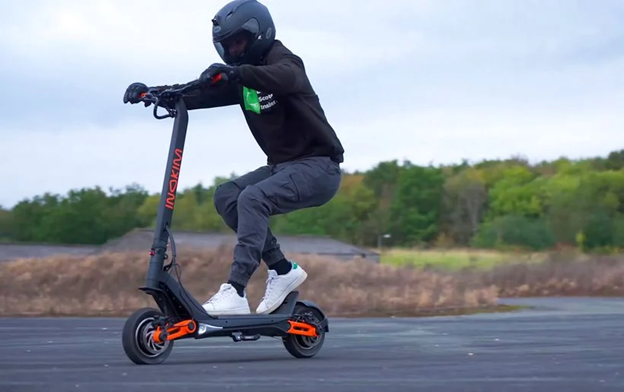
When you’re just starting, use your handlebars to turn — especially at slow speeds. As you go faster, turning is more about leaning your body than steering the handlebars.
Here’s how to do it right:
- Use your legs and core to keep balance
- Don’t pull too hard on the handlebars — it can make you wobble
- At low speeds (under 5 mph), steer with the handlebars
- At normal or high speeds, lean gently into turns while keeping handlebars mostly straight
How to Brake Safely
When you need to stop quickly:
- Bend your knees
- Shift your weight backward over your back leg — like you’re about to sit down
Most scooters have front and back brakes. The front brake is stronger, but be careful — if you squeeze too hard, you could flip forward (especially on scooters with powerful brakes).
Tips for safe braking:
- Use both brakes together
- Don’t brake hard while turning
- Try to brake in a straight line
- Practice in a safe area so you can get used to the feeling
How to Accelerate
Press the throttle gently to speed up. If your scooter is powerful, it’s important to keep a low center of gravity:
- Bend your knees
- Keep your feet in a strong position
- Don’t pull on the handlebars — use your legs for balance
Pro tip: If you’re accelerating fast, push more weight onto your back foot. This helps you stay stable and keeps the front wheel from lifting.
Advanced Tips for Smoother Rides
1. Watch the Road Ahead
Keep an eye out for potholes, cracks, and debris. Scooter tires are small, so even tiny road bumps can throw you off. Avoid swerving too hard — quick, steady moves are safer.
2. Ride Over Obstacles the Smart Way
If you can’t avoid an obstacle, shift your weight backward and lightly lift the front wheel by pulling up on the handlebars. Don’t try to jump — just enough to help the wheel roll over smoothly.
3. Make Your Battery Last Longer
Want to ride farther before recharging? Try these tips:
- Kick off to start instead of using the motor
- Accelerate slowly
- Keep your speed down
- Inflate tires to the right pressure
- Ride in warmer weather — cold batteries don’t perform as well
Regenerative braking won’t add much range (only about 2–3%), but it does help your brake pads last longer.
After Your Ride: Keep Your Scooter Safe
Once you’ve reached your destination, don’t forget to lock your scooter properly — especially if you leave it outside. The best lock is a strong U-lock (like the Kryptonite New York series). These are heavy but much more secure than cable locks.
How to lock your scooter:
- Lock through the frame, handle, or folding mechanism
- Choose something that can’t be moved or broken easily
If your scooter got wet during the ride, dry it off with a towel and store it inside so it can fully dry. This is especially important if it doesn’t have a waterproof rating.
Final Thoughts
Electric scooters are easy to learn and a fun way to get around. Just remember: take safety seriously, practice in a safe place, and build up your skills slowly. With a little care and attention, you’ll be cruising around confidently in no time.
Happy riding!